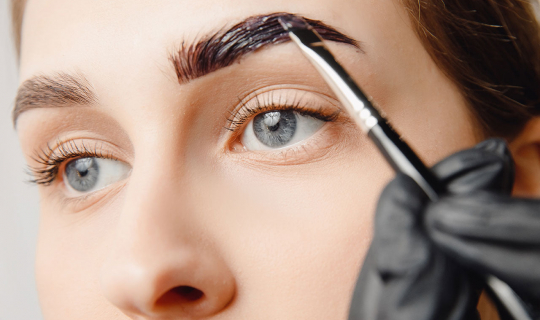

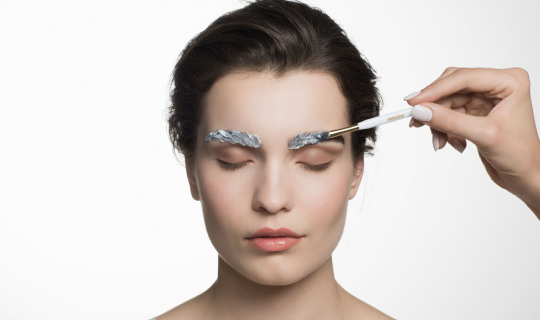
The question of choosing a method of eyebrow coloring arises for almost every client. Dye or henna for eyebrows are two different approaches to styling, providing distinct visual and practical results. Therefore, it is impossible to say definitively which is better without considering individual characteristics.
Today, eyebrow styling is more than just color. Eyebrow correction includes selecting the shape, working with density, and creating a harmonious facial appearance. The chosen coloring method affects the eyebrow shade, visual volume, and overall natural effect.
The popularity of both methods is understandable. Eyebrow dye is chosen for precision and color control, while henna is preferred for density and expressiveness. There is no universal option, as the result always depends on skin condition, hair type, and the goal.
How eyebrow dye works
Dye directly affects the hair structure. The pigment penetrates inside and fixes in the cuticle, almost not touching the skin. Modern eyebrow dye provides a clean shade without harsh transitions, which is especially important for a natural look.
This method suits those who want to emphasize color while maintaining the natural eyebrow shape without additional skin darkening. Clients with sensitive or dry skin often choose dye.
Advantages of eyebrow dye
- precise shade control;
- neat and clean result;
- comfortable for sensitive skin;
- fast coloring process.
Disadvantages of eyebrow dye
- weak skin adhesion;
- does not fill gaps;
- less long-lasting;
- requires regular touch-ups.
After dyeing, hairs look well-groomed and natural, but without a fullness effect. This is important for clients with sparse eyebrows or noticeable gaps.